

AI has given talented designers even more superpowers, but their taste and judgment still make the work excellent! 🔥
In my most recent podcast conversation, I chat with April Zhu, who has created some of the most creative design experiments I've seen recently, like Colorfigures, Tinycharts, Minicharts, and more. If you're curious how AI is changing design the way it's changing the rest of tech, this one's for you:
The full podcast summary and transcript can be seen here.
Also, besides ▶️ YouTube, you can listen/watch on 🎧 Spotify and 🍎 Apple Podcasts if these services are more your style!
Taste and Judgment
A lot of our convos around AI revolves around taste and judgment. This convo with April was no different. With AI, we have seen that almost anyone can produce a polished-looking app, chart, or illustration in an afternoon. So what sets a great designer apart from your run-of-the-mill AI slop? For April, standing out has never been about mastering a specific tool:
Personally, I feel like my main advantage of being a designer is never really about, I can use Figma very well, or I can know the theory of design very well. It’s really about taste and being able to judge what is something good versus what is something banal.
April uses AI a lot. She calls it “a super tool” and uses it “to realize ideas, to brainstorm, to connect the dots.” There’s one part she won’t hand off, though:
I don’t want to outsource my taste and judgment.
Someone still has to tell the AI what to make, and then decide whether the result is good enough. AI can’t replace that, at least not yet. In an earlier chat with Dave Thackeray, this emphasis on taste and judgment is what we called one of the few durables skills we need to develop in the age of AI.
Colorfigures is a great example of what happens when taste and judgment have a collision course with AI:
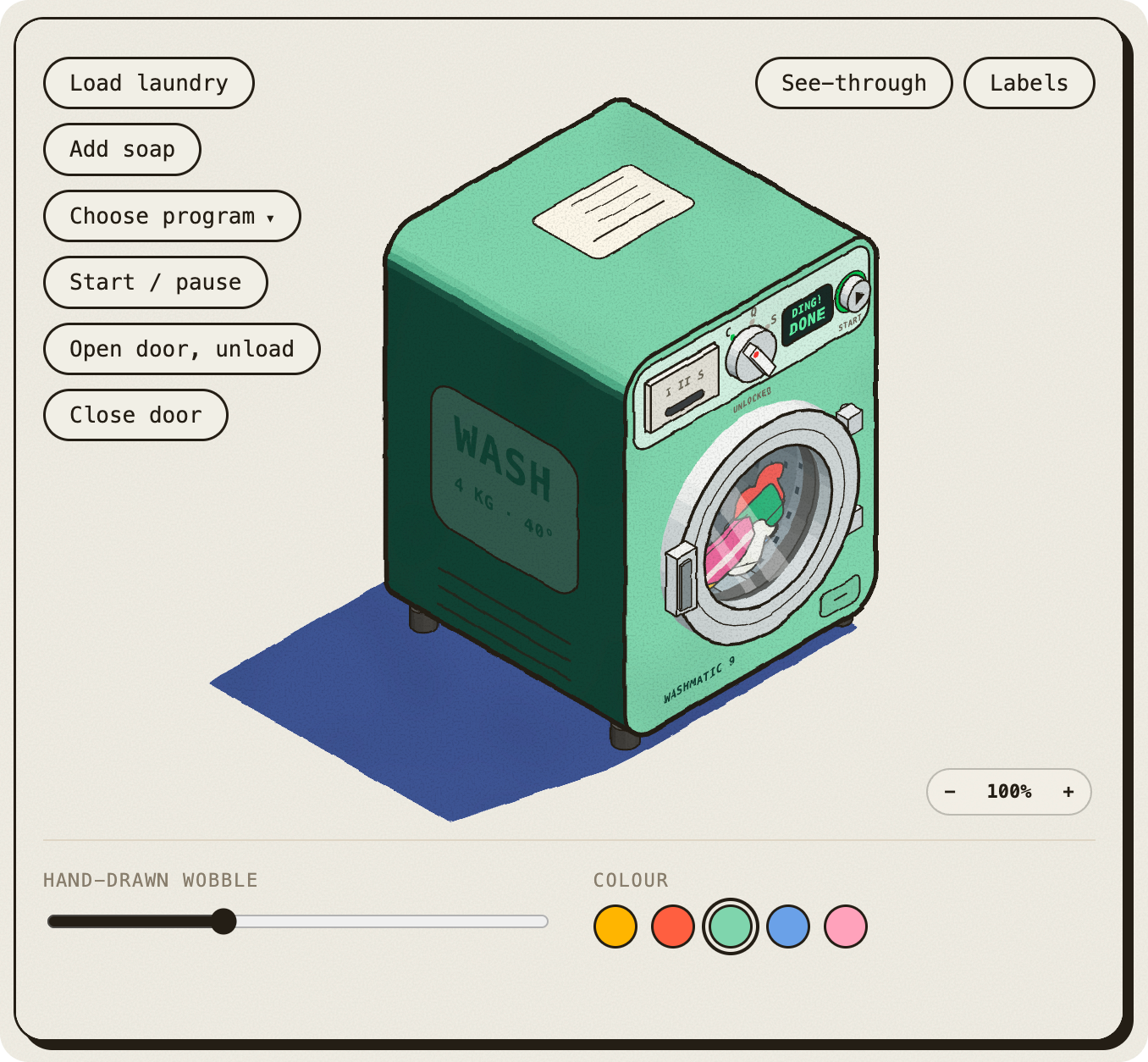
Most of what April saw AI make was neat and perfect. It was often repetitive and had a distinct AI feel. She wondered whether it could draw something clumsy and hand-drawn instead. This was the unique insight. The AI did the drawing, but the idea and the many rounds of iteration to get the right look were hers.
My favorite part of the conversation is her take on AI as a great equalizer:
Everyone has the ability to create. So what makes your creation excellent? It’s your taste, your judgment, and your sense of what is the excellent piece.
She also thinks designers are in a great spot right now. With AI, they have unlimited production power on top of their taste and creativity, which puts them “in the best position to create.” A lot of the design experiments that April perfected she turned into skills that anybody can point their agent to and replicate on their own.
Till Next Time
We spend a lot of time discussing how AI has changed software development. It isn’t until we explore other domains such as UX design where we see AI having an equal if not more consequential impact on how ideas get turned into reality. Hopefully April’s insights help you see things in a different light and help apply relevant learnings in your day-to-day doings!
If you want to discuss this topic further, reply to this email, post on the forums, or find me on Twitter / X.
Cheers,
Kirupa 😀