


For most of my career, I learned to scale my ambitions to match my abilities.

Whenever I wanted to build something, I would ask: How much do I know? How long will this take? What can I realistically build myself?
This wasn’t pessimism. It was rooted in what I saw work. Building technology was expensive. Prototypes took time. Crossing into unfamiliar territory added a boatload of unknowns. The sensible approach was to start with the smallest version, validate it, and expand only when the results justified the next investment as shown by this famous visual:

Each stage had to earn the next one. Taking a big swing too early felt irresponsible because the cost of being wrong was so high.
AI-Native Creators Think Differently
AI-native creators are growing up with a different model. They aren’t as likely to begin by asking what someone with their current skills can realistically build. They begin by asking, What do I want to exist?
Then they use AI to figure out how to make it. Creators are already entering unfamiliar domains and building things that once seemed unimaginable. For example, this complex visualization app was created primarily with AI tools:
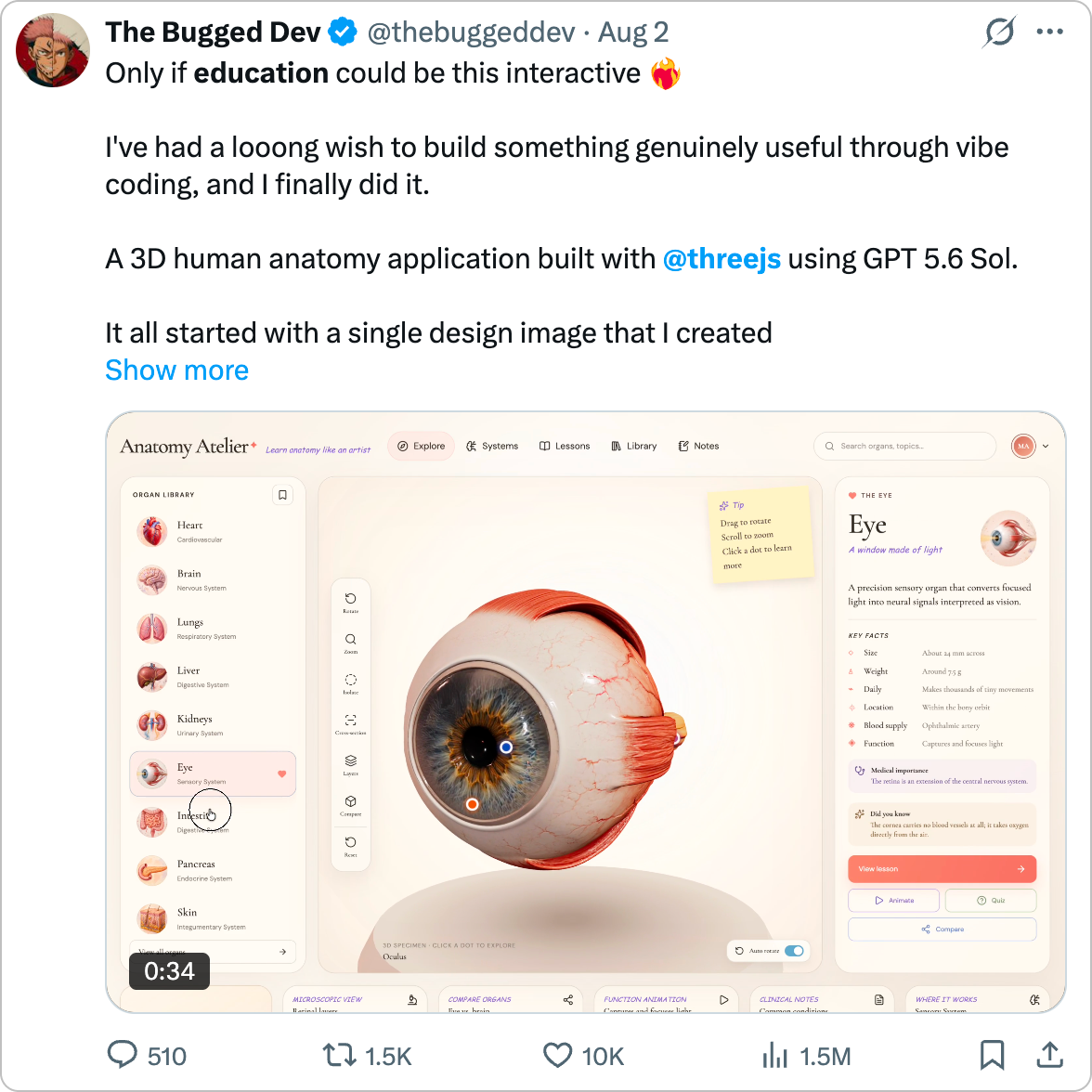
This new breed of AI-native creators can move across unfamiliar technologies, build a complete version, throw it away, and try another direction without treating the lost work as a major setback. Crawl, walk, and run can happen in rapid succession. If there are stages beyond run, like fly or teleport, those are simply options worth exploring:
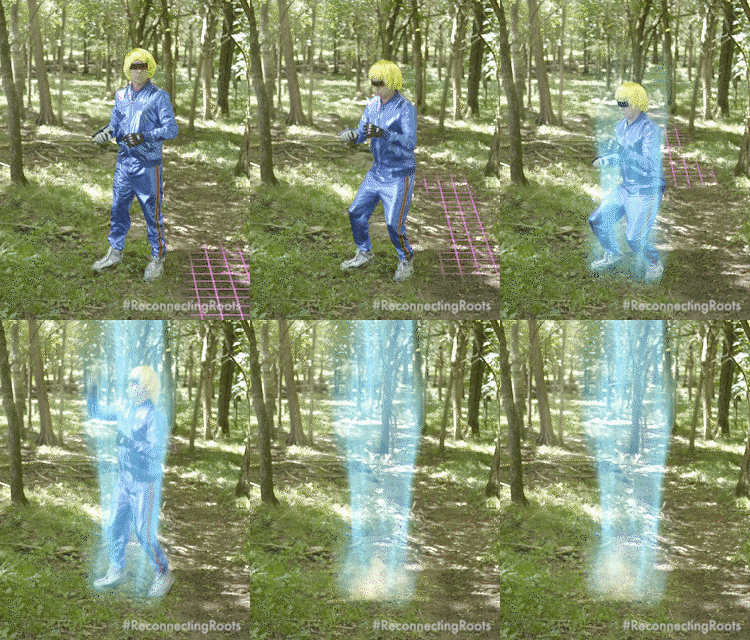
As a result, they are more ambitious. They take bigger swings earlier and more often.
To those of us shaped by the older model, this can look naive or reckless. If I’m being honest, some of that reaction may even be jealousy! 😅 Still, AI doesn’t eliminate complexity, guarantee quality, or make every idea good. Some ideas will fail.
The AI-native advantage isn’t that AI works better for them. Their mental model is simply better aligned with what AI makes possible. While experienced builders are still reducing an idea to make it feasible, an AI-native creator may already be testing the ambitious version. They will encounter real limits along the way, but they aren’t slowed by imagined ones inherited from an earlier era.
Conclusion
AI changes more than how quickly we build. It changes what deserves to be attempted in the first place.
For those of us shaped by the older model, the challenge is to keep the useful judgment our experience gives us while recalibrating our sense of what is possible. Before shrinking an idea, we should ask: Is this limit real today, or is it just a memory of what building used to cost?
Curious to hear whether AI has changed the size or frequency of the swings you take, so feel free to share your thoughts on the forums or on Twitter / x.
Cheers,
Kirupa 😇